Therapeutic Potential of Alkaloid-rich Mitragyna speciosa Extract in MPTP-Induced Zebrafish Parkinson’s Disease Model
Parkinson's Disease and Mitragyna speciosa
Vol. 20 No. 2 : 2025 (510-524)

Abstract
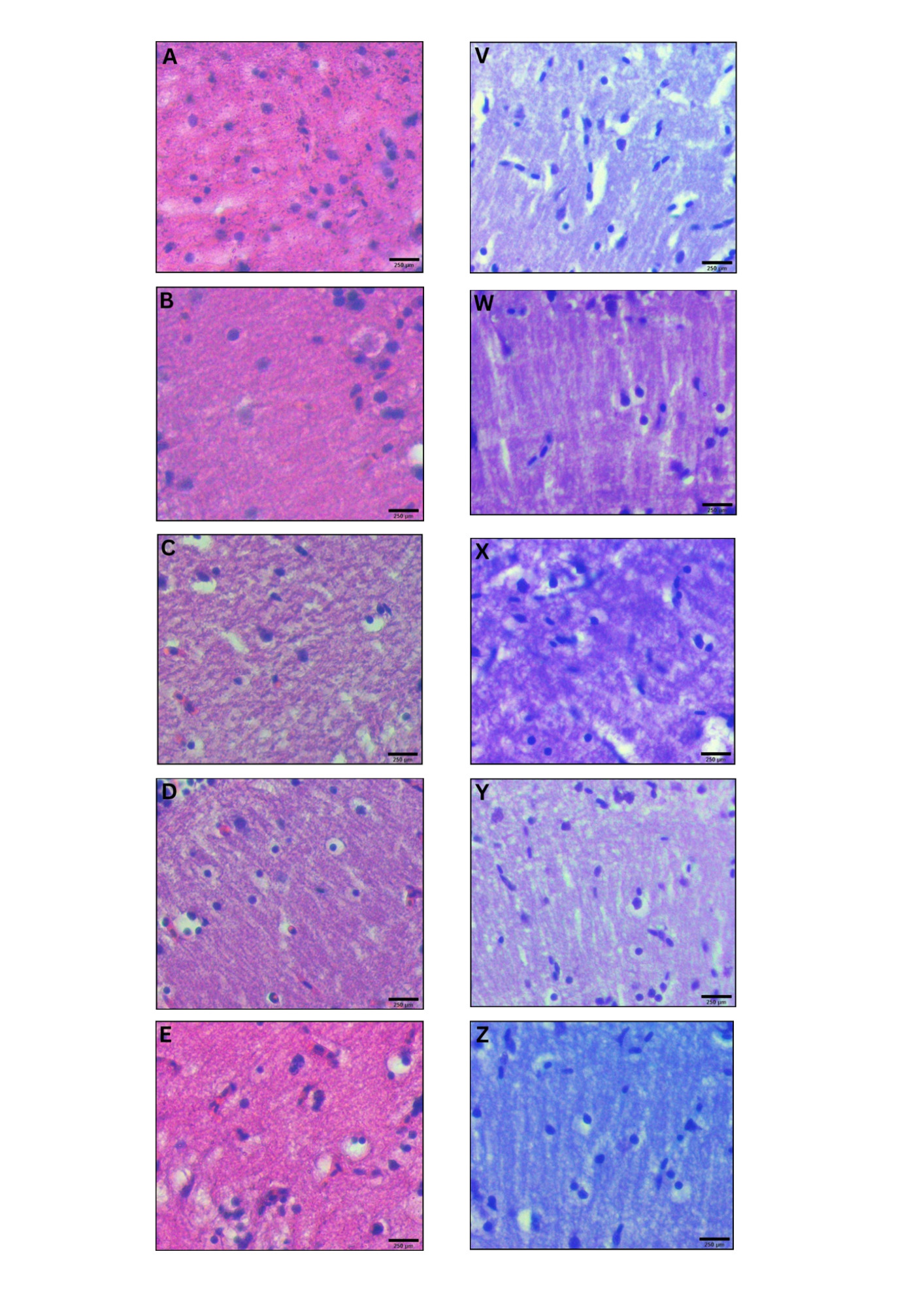
Parkinson’s disease (PD) is a neurological condition affecting the motor functions of the brain, characterised by the degeneration of dopaminergic neurons in the substantia nigra pars compacta region. The primary symptoms include dyskinesia, bradykinesia and resting tremors. This study investigated the potential impacts of Mitragyna speciosa or known as kratom on zebrafish with PD. 1-methyl-1,2,3,6-tetrahydropyridine (MPTP) solution was administered intraperitoneally to zebrafish to develop Parkinson’s symptoms in 2 to 3 days, followed by three concentrations treatment of kratom, for 28 days. On day 28, locomotor behaviour was evaluated to determine the duration spent in the top, middle, and bottom zones, total distance travelled and swimming speed. Then, the zebrafish were euthanised and preserved in a 10% formalin solution. Fixed zebrafish were processed and embedded in paraffin blocks for haematoxylin and eosin, and cresyl violet staining. The results of treatment groups showed that kratom had a neuroprotective impact, increasing time spent from bottom to top zone, distance travelled and swimming speed compared to the negative group. Moreover, the treatment groups experienced a rise in neuron regeneration and an enhancement in neuron appearance following a 28-day exposure to kratom. In conclusion, kratom shows promise as a potential treatment for PD by effectively reducing symptoms and improving movement.
Keywords :
Anti-inflammatory; Mitragyna speciosa; MPTP; parkinson’s disease; zebrafish,
Correspondance Address
Muhammad Danial bin Che Ramli. Faculty Health and Life Sciences, Management & Science University, University Drive, Off Persiaran Olahraga, 40100 Shah Alam, Selangor, Malaysia. Tel: +6013 696 9173 Email: muhddanial_cheramli@msu.edu.my