Effect of Caffeic Acid Phenethyl Ester on Wound Healing: A Systematic Review
Caffeic Acid and Skin Wound Healing
Abstract
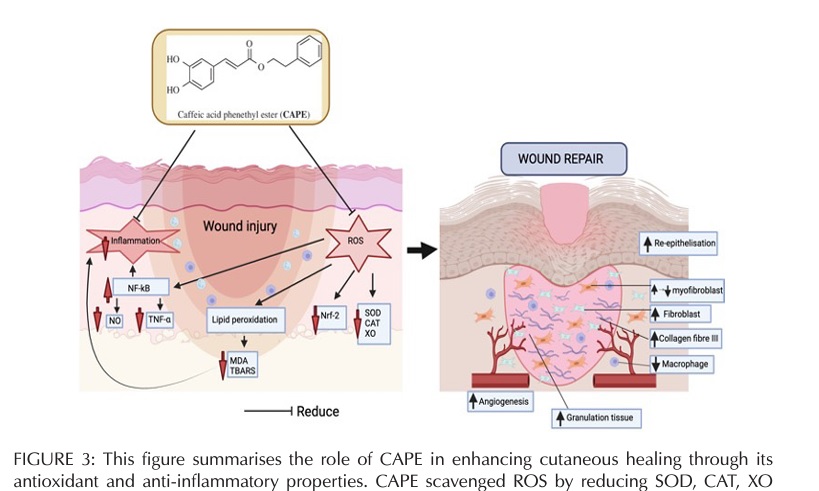
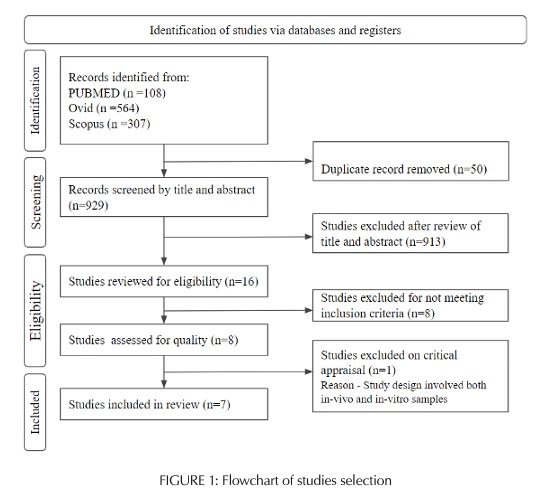
Caffeic acid, a naturally occurring organic compound, possesses antioxidant and anti-inflammatory properties, along with its derivatives. This systematic review aimed to evaluate the effect of caffeic acid and its derivatives on oxidative stress and inflammatory response in cutaneous wound healing. This review was conducted according to the Preferred Reporting Items for Systematic Reviews and Meta-Analyses (PRISMA) 2020 guidelines. Searches were performed in PubMed, Scopus, and Ovid MEDLINE. Articles published between 2000 and June 2022, with seven articles meeting the inclusion criteria were retrieved. The articles constituted in-vivo studies that utilised caffeic acid phenethyl ester (CAPE) as the therapeutic agent in three types of cutaneous wound including full-thickness burn injury (n=4), two incisional wounds, and one pressure ulcer. CAPE scavenged reactive oxidative species and reduced lipid peroxidation, superoxide dismutase, nitrotyrosine, malondialdehyde, catalase, xanthine oxidase, and nitric oxide levels. The treated injured area revealed enhanced granulation tissue formation, vascularisation, and collagenisation as well as long-term effects of CAPE as evidenced by reduced myofibroblast amount, CD68-positive macrophages, and increased collagen deposition. The systematic review emphasised how antioxidant and anti-inflammatory effects of CAPE could improve the process of wound healing, suggesting its substantial potential for clinical applications in this domain.
Keywords :
Antioxidant,
caffeic acid phenethyl ester,
thermal injuries,
Correspondance Address
Dr Nahdia Afiifah Abdul Jalil. Department of Anatomy, Faculty of Medicine, Universiti Kebangsaan Malaysia, Jalan Yaacob Latif, Bandar Tun Razak, 56000 Cheras, Kuala Lumpur, Malaysia. Tel: +603 9145 8605 Email: nahdia.afiifah@ukm.edu.my